Placement

Tech2people Health care & Education offers specialized job placement services in Gulf countries catering to ‘’Health Care Professionals including Doctors & Allied Health Experts. One of the core functions of job placement services is to carefully match job seekers with suitable job opportunities. By analysing candidates’ skills, qualifications, and career goals, these services ensure that the right people are placed in the right roles.
A Placement Year offers you a chance to ‘road-test’ both a job and company before any permanent commitment is made, it gives you the opportunity to become familiar with a certain kind of company and decide for yourself if this suits your own career goals.
- Familiarise yourself with the job description.
- Research the healthcare organisation that is hiring.
- Keep your resume updated and take multiple copies.
- Practise mock interviews to rehearse your responses.
- Arrive early and dress professionally for the in-person job interview.
How Do I Prepare for An Interview?
How do I introduce myself in an interview?

Aim for about 30 seconds to one minute, and cover the main points that you want the interviewer to know about you. These include your name, your current or previous position, your education and certifications, your relevant achievements and goals, and why you are interested in working for them.
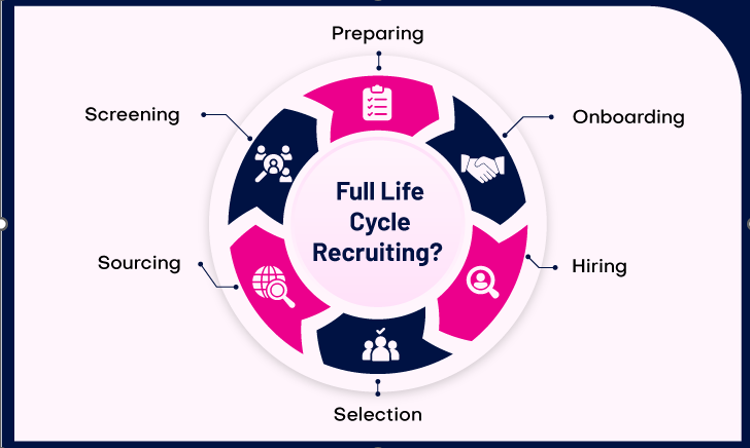
Sourcing is the use of one or more strategies to attract and identify candidates to fill job vacancies. It may involve internal and/or external recruitment advertising, using appropriate media such as job portals, local or national social media, business media, specialist recruitment media, professional publications, window advertisements, job canter, career fairs, or in a variety of ways via the internet.
Employers are likely to recognize the value of candidates who encompass soft skills, such as interpersonal or team leadership,[9] and the level of drive needed to stay engaged[10]—but most employers are still using degree requirements to screen who already possess many of those skills.[11] In fact, many companies, including multinational organizations and those that recruit from a range of nationalities, are also often concerned about whether candidate fits the prevailing company culture and organization as a whole Companies and recruitment agencies are now turning to video screening as a way to notice these skills without the need to invite the candidates in person.[
Nursing is a fulfilling career — and one that’s in demand. An aging population combined with an increased emphasis on preventive care will continue to create demand for skilled nurses. If you’re preparing to interview for a nursing job, it’s vital you are prepared.
This guide can help. Learn what to expect at your nursing job interview, including how to prepare for behavioural-based interview questions.
12 Tips for Your Nursing Job Interview
These tips will help you shine in your next interview:
- Check Out the Employer’s Website
Research will not only teach you about the organization’s history, but it will also help you understand how the company presents itself. This will give your insight on how to tailor your answers to align with the company’s vision.
- Focus on the Job Description
Think about how your experience and skills align with the description. This can help you show how you’d excel in the job.
What do they say they’re looking for in the job description? Are they looking for a problem solver, a leader, a team player? They will likely address these with a behavioural question or two, so be prepared to speak about your skills in each of the areas.
- Practice
Prepare success stories for the most common topics of behavioural-based nursing questions, which include teamwork, problem solving, leadership skills, and performance under pressure. More information about behavioural-based nursing questions is provided in the next section.
If you’re applying for a job, you’ve never held before, such as a supervisory position, talk about what responsibilities you had on your team, such as training or problem solving that have prepared you for this new role.
- Take Your Time Answering
Don’t let nervousness derail you. Take a moment to think of an appropriate answer. It’s OK to take a breath or a sip of water.
- Be Positive
Some behavioural interview questions will ask you to discuss how you worked through an issue or failure at work. Don’t focus on the failure, though, but on the solution. Show that you overcame the problem, but don’t dwell on it.
- Be Thorough in Your Explanation
There’s no doubt the interviewer will ask you to “tell [me] about a time when ___ happened.” Give enough detail of an event for the interviewer to understand. The situation could be from a previous job, school, or even a volunteer experience.
- Tell What Your Objective Was at the Time
As you explain your situation, make sure to give enough context to the interviewer. What were you trying to accomplish in the situation you are describing?
- Explain Measures You Took to Address the Situation
Detailing how you set out to address the situation demonstrates your problem-solving skills. In a few sentences, lay out the steps you took to help resolve the matter.
- Share the Result of Your Actions
It may feel boastful to share how your actions resulted in a positive outcome, but this is the time for it. Telling the interviewer the outcome of the situation highlights your strengths as a job candidate.
- Be Aligned, Not Perfect
It’s important that your body language, tone, and confidence match your words. If they don’t match, the interviewer knows there’s a reason. You don’t need to be perfect, but the interviewer does need to see that you have grown and learned from your experiences.
- Dress Appropriately
As you plan what to wear during a nursing interview, make sure that it’s business professional. Wear clean, unwrinkled clothes. Some examples of what can be worn to an interview include a skirt with a complementary blouse, pantsuit, dress slacks, shirt and tie, sport coat, and suit. Learn more about how to dress for a job interview.
- Bring Your Resume
Bring clean copies of your nursing resume or CV in a binder or portfolio. Your resume doesn’t need to be fancy; it should have your personal information at the top and list your education and work history below. Be sure to include a list of your accomplishments and participation in committees and other work groups.
Interview Tips for Nurses (Including Behavioral-Based Questions)
What Are Behavioural-Based Interview Questions?
According to the Society for Human Resource Management, behavioural-based interview questions ask you to provide specific examples that demonstrate you have certain knowledge, skills, and abilities. These questions assess what you have done in the past, not what you say you might do in the future. This enables hiring managers to assess you more objectively. The premise is that past behaviour is the best indicator of future behaviour.
Preparation is key for handling behavioural-based interview questions.
6 Common Themes of Behavioural-Based Nursing Interview Questions
Employers are looking for certain qualities and usually tailor their questions to find out whether candidates possess these qualifications. Below are six common qualities that employers may try to assess with behavioural-based questions during a nursing interview.
- Adaptability
You may face questions along the lines of, “If you were able to go into your past and do something differently, what would it be?” That question will give you an opportunity to show growth in a certain area.
Choose an event where you didn’t necessarily perform poorly but could have done better. You may wish to cite an error that didn’t result in harm, then explain what you learned and how it changed the way you practice.
- Communication Style
It’s customary for an interviewer to give a nurse a common scenario and ask what they did in that scenario. How you answer can tell your interviewer a lot about you; they’ll watch for body cues, language, and tone.
For example, an interviewer may ask about a time when a patient or family member was dissatisfied with you or your patient’s care and how you resolved the issue.
In this case, you could explain a situation in which you were called out of the room for a code and had to stop everything you were doing with your first patient, and that was misconstrued by the patient as not caring. Use this as a springboard to explain how you recognized this was a communication problem on your part and how you rectified the situation and learned from it for the future.
- Strengths and Weaknesses
You may prepare examples of your top three strengths and weaknesses. But don’t call them weaknesses — call them opportunities for improvement.
Speak to your leadership ability, a particular skill that you excel at, and one area of knowledge in which you are a subject matter expert. Try not to use compassion as one of your main strengths, as compassion is already known to be a core value of most nurses.
- Patient Care
If you’re asked about your patient care skills, highlight your best one.
If you’re skilled at initiating IV lines, share that. If you’re good at critical analysis, say so. Be confident in the things you’re good at.
- Teamwork
Interviewers often ask, “Tell me about a time you had a difficult working relationship with a colleague.” Tell them what the challenge was, how you addressed it, and what you learned from it. Don’t portray yourself as perfect, but do highlight how you’ve grown.
- Time Management
Questions about time management are about your life at work and your work-life balance. Talk about the way you plan your time, how you delegate, and how you turn off work when appropriate. Employers want to know you have what it takes to be successful at home and at work.
Earn a degree you’re proud of and employers respect at Purdue Global, Purdue’s online university for working adults. Accredited and online, Purdue Global gives you the flexibility and support you need to come back and move your career forward. Choose from 175+ programs, all backed by the power of Purdue.
What to do when you have finished your placement
- Step 1 – Say thanks! Formally thank your placement / work experience provider. …
- Step 2 – Reflect. It might seem pointless, but it is actually important to do some self-reflection of your placement experience. …
- Step 3 – Update your CV. …
- Step 4 – See a Careers Consultant.
Our Academy cell works as a bridge between the students and potential employers to provide career guidance, training, and placement services to the students. The placement cell in a college typically functions by first identifying the sectors that match the academic background of the students.

Services Offered
- All Over India
Contact Us
- No.16, Anantha Nagar, Main Road, Near Madhava Kripa School Manipal – 576104
- Infotech2peopleorg@gmail.com
- +91 9060193808
- +91 9686859930